
Quick Answer: Bloom boosters work, but mostly by correcting a phosphorus and potassium deficiency your base nutrients were already supposed to cover. They add real bud density and weight when dosed conservatively in early to mid flower.
However, when used at full label strength on top of a complete nutrient line, they are one of the most common causes of nutrient burn and lockout in home grows. Start at half the recommended dose, watch your plants, and never run a PK booster blind.
I bought my first bottle of bloom booster after reading a forum thread where someone described their buds doubling in size overnight. They did not double overnight. What actually happened over the following two weeks was a slow curl at the tips of my fan leaves that I mistook for a calcium deficiency until I finally connected it to the booster I had just added on top of a nutrient line that was already feeding adequate phosphorus and potassium.
I flushed, backed off, and the plant recovered. The lesson stuck. Bloom boosters are not magic, and they are not useless either. They are a concentrated tool that punishes carelessness fast.
This guide covers what bloom boosters for cannabis actually do, the honest evidence for and against them, the best products, and how to use one without burning your plants.
Disclosure: WeedMania420 participates in the Amazon Associates Program and the ILGM affiliate programme. Purchases through our links may earn us a small commission at no extra cost to you. We only recommend products we have genuinely researched and believe in.
Table of Contents
What a Bloom Booster Actually Is
Bloom boosters are nutrient additives designed to support the plant during the flowering stage. They usually focus on phosphorus, which supports flower and root development, and potassium, which is responsible for bud size, density, and taste, alongside microelements that most companies keep secret.
The chemistry behind this is straightforward. Phosphorus is vital for energy production within the plant, fuels healthy growth, and stimulates cannabinoid and terpene synthesis, while potassium is the key factor in energy transfer within the plant, CO2 uptake, and water balance. Many bloom boosters also contain calcium to support the structural health of cell walls as the plant continues to develop.
The reasoning that justifies adding a PK booster on top of a base nutrient line is that at the flowering stage, the plant’s nitrogen needs are reduced, but the demand for phosphorus and potassium increases sharply as they become crucial for bud formation and trichome development. That much is genuinely true and grounded in plant physiology, not marketing. Where the debate gets murkier is what happens next.
Do They Actually Work? The Honest Answer
Most bloom busters that actually work are just PK or carbohydrates or both, with some using natural sugars that also carry plant hormones. That assessment from an experienced grower community sums up the realistic case for boosters: they work because they deliver real nutrients your plant can use, not because of some proprietary secret formula.
But the skepticism is just as well-founded. Some voices in the cannabis space argue that most formulas are far too heavy in phosphorus and potassium, and marketing very much revolves around making people think they need a product, even if they do not. This is the central tension in the entire bloom booster category. The nutrients themselves are real and useful. The marketed dosages on the bottle are frequently calibrated for maximum visible difference in a demo grow, not for the safety margin of a typical home setup.
A grower who has run dozens of cycles both with and without boosters put it plainly. Boosters can do the job, but only if you know how and when to use them. That qualifier, knowing how and when, is doing all the work in that sentence, and it is the entire reason this guide exists rather than a simple yes or no.
There is also a more skeptical take worth taking seriously from people who have used PK boosters across multiple grows and concluded the difference is marginal at best. One grower’s experience after running PK, Boost, and Explosion-style products across several cycles was that they produced a few more flowers maybe, but did not improve bud at all and carried a real risk of foxtailing, eventually leading them to stop using anything and just let the plants run. This is not an isolated opinion. It reflects a real possibility: if your base nutrients are already well-balanced for flower, a booster on top may add risk without adding meaningful benefit.
The honest synthesis: bloom boosters work as intended when your base nutrient line is light on PK and your plant is genuinely flower-stage deficient in those elements. They add little to nothing, and meaningfully raise your risk of lockout, when your base nutrients already cover flower-stage PK needs adequately.
Nutrient Lockout and Burn
This is the part most product pages leave out. Over-supplementation can lead to an accumulation of salts in the growing medium, making it difficult for the plant to absorb nutrients, a condition known as nutrient lockout.
Bloom boosters with high PK numbers can destabilise your nutrient mix and cause this exact problem, particularly when stacked on top of a complete feeding line from a different manufacturer that was never designed to be combined with it.
A large share of flowering failures are linked to late-stage nutrient lockout caused by excessive EC spikes, often from growers assuming more phosphorus and potassium automatically means larger yields. Whether the precise number holds up, the underlying mechanism is well documented and matches what shows up constantly in grower forums.
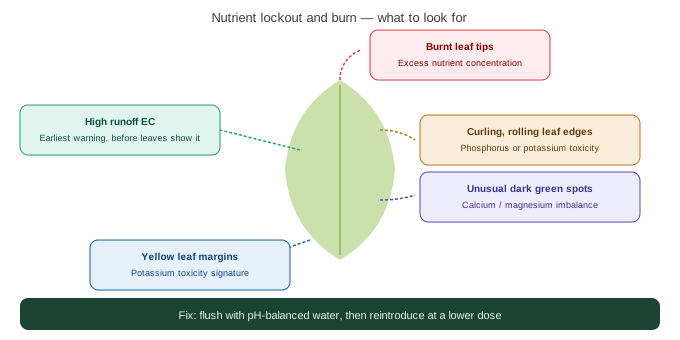
The symptoms to watch for are specific. Phosphorus toxicity is often linked to burnt leaf edges, micronutrient lockout, and unusual discolouration that can resemble phosphorus deficiency during flowering, which makes self-diagnosis genuinely tricky. Potassium toxicity usually appears as yellow or burnt leaf margins alongside calcium and magnesium imbalance symptoms caused by excessive PK additives.
If you see leaf tip curling that looks like light stress, progressive tip burn, or leaf edges rolling like a heat-stressed leaf, a recent PK booster addition is one of the first things to suspect, particularly if the symptoms started within a week of adding it to your feed.
If you do see lockout symptoms, the standard fix is a flush with pH-balanced water to wash excess salts from the growing medium before the issue compounds. This pairs directly with the pH guidance covered in our pH meter guide, since pH that drifts outside 6.0 to 7.0 for soil or 5.5 to 6.5 for hydroponics makes lockout both more likely and harder to diagnose correctly.
When a Bloom Booster Makes Sense
A bloom booster is worth using when one or more of these is true for your specific grow.
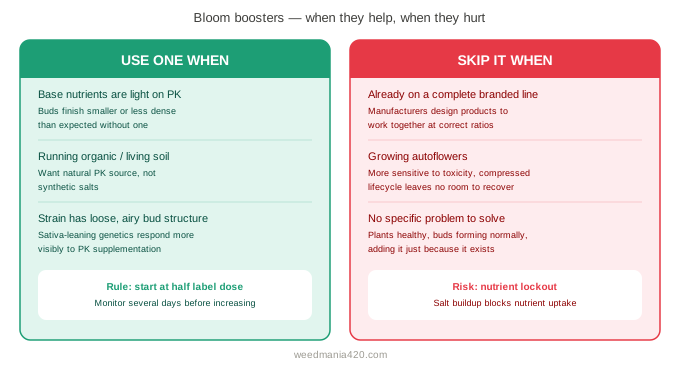
Your base nutrient line is genuinely light on PK for flower. Some all-in-one nutrient lines, particularly beginner-oriented products, are formulated conservatively across the whole lifecycle and may not deliver enough phosphorus and potassium at peak flower demand. If you have grown the same base nutrient before without a booster and noticed buds finishing smaller or less dense than expected, a light PK addition in weeks 3 through 6 of flower is a reasonable experiment.
You are running an organic or living soil setup and want a natural PK source rather than a synthetic salt-based one. Organic boosters emphasise natural inputs and soil biology, but may require longer adjustment periods to see visible effects compared to synthetic blends with precise PK ratios that deliver faster, more predictable results. If you are already running a top dressing programme with bone meal and langbeinite in flower, you may already be getting the PK boost an organic booster would otherwise provide, which is worth checking before adding another input.
You are specifically chasing bud density on a strain known for looser, airier flower structure. Some genetics respond more visibly to PK supplementation than others. If you are growing a strain that tends toward sativa-leaning, fluffier bud structure, a conservative booster in mid flower is more likely to produce a noticeable density improvement than on a naturally dense indica-leaning strain that is already producing tight colas without help.
When to Skip It
You are already running a complete, branded nutrient line as directed. Nutrient manufacturers design their products to be used with each other, building in the right portions of each nutrient for each stage of the grow cycle.
Adding a third-party PK booster on top of a complete, correctly-dosed line from a single manufacturer is the most common way home growers accidentally cause the exact lockout problem boosters are supposed to prevent.
You are growing autoflowers. Autoflower cannabis strains are generally more sensitive to nutrient toxicity than photoperiod strains, and their compressed lifecycle leaves little room to recover from a feeding mistake.
If you are running autoflower nutrients, treat any bloom booster addition with extra caution and at a meaningfully reduced dose relative to label instructions.
You have not identified a specific problem the booster is meant to solve. If your plants are healthy, your buds are forming normally, and you are adding a booster purely because it exists on the shelf, you are adding risk without a clear corresponding benefit.
The marketing case for boosters relies heavily on the assumption that every grower needs one. Plenty of experienced growers run successful harvests with a single well-formulated base nutrient and nothing else.
Best Bloom Boosters Available on Amazon
General Hydroponics FloraBloom
A widely available, moderately priced bloom-stage nutrient that works as either a complete bloom feed or a lighter supplemental boost on top of an existing line. It pairs naturally with the rest of the General Hydroponics Flora series, which reduces the cross-brand compatibility risk that causes lockout when boosters and base nutrients come from different manufacturers with different underlying chemistries.
Best for: Growers already using General Hydroponics products who want a PK boost that is designed to integrate with their existing feed.
👉 Check current price on Amazon.
Fox Farm Beastie Bloomz
A concentrated PK booster from a well-established brand, formulated for use during the back half of flower when bud formation accelerates. Fox Farm products are widely stocked and commonly recommended for soil growers running the Fox Farm trio, making it a lower-risk addition for anyone already on that base line.
Start meaningfully below the label rate for the first application and observe before increasing.
Best for: Soil growers on the Fox Farm feeding line who want a familiar-brand PK supplement.
Advanced Nutrients Big Bud
One of the most recognised bloom booster names in the category, designed to be used early in flower to maximise bud site development before the plant moves into its bulking phase.
Advanced Nutrients explicitly designs its product lines to work together, and using Big Bud alongside other Advanced Nutrients base products reduces the formulation mismatch risk that occurs when mixing brands.
Best for: Growers running the Advanced Nutrients pH Perfect line who want a brand-matched early-flower PK booster.
👉 Check current price on Amazon.
Down To Earth Bone Meal (Organic)
For organic and living soil growers, a natural granular bone meal delivers a slow-release phosphorus source without the salt-based lockout risk associated with synthetic liquid boosters.
This is the same amendment covered in detail in our top dressing guide, where it is recommended at the light flip and again three to four weeks into flower. Slower acting than a liquid booster, but meaningfully lower risk for overfeeding.
Best for: Organic and living soil growers who want PK support without synthetic salts.
👉 Check current price on Amazon.
How to Use a Bloom Booster Without Burning Your Plants
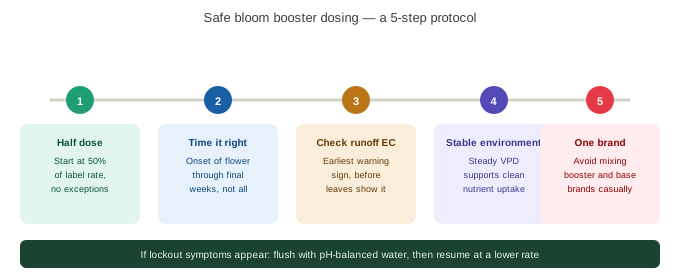
Start at half the label dose. Introduce the PK booster at a low concentration to allow your plants to adjust, then monitor the response over several days before increasing. This single habit prevents the majority of booster-related lockout problems reported across grower communities.
Time it to the back half of flower, not the whole cycle. PK boosters are most effective when introduced at the onset of the flowering stage, with many growers reserving the heaviest application for the final weeks before harvest when bud density gains matter most and there is no longer a long stretch of growth ahead to be disrupted by a feeding mistake.
Watch runoff EC, not just leaf colour. There is no single EC level that causes nutrient burn because tolerance varies between strains, growth stages, and growing mediums, but consistently high runoff EC readings indicate salt buildup before visible symptoms appear. Checking runoff gives you a warning before the leaves do.
Keep your environment stable while running a booster. Factors like temperature, humidity, and light intensity all influence nutrient uptake, and an unstable environment makes it harder to isolate whether a problem is coming from the booster or from something else entirely. This is where a properly calibrated VPD setup earns its keep, since stable leaf temperature and humidity support efficient nutrient uptake and make booster dosing more predictable.
Do not mix booster brands with your base nutrient brand casually. If lockout symptoms appear, flush with pH-balanced water and back off the booster before reintroducing it at a lower rate. Sticking with a single manufacturer’s full line, or being deliberately conservative when crossing brands, removes most of the guesswork.
FAQ
Will a bloom booster increase my yield? Sometimes, and the increase is rarely as dramatic as marketing suggests. The clearest yield benefit appears when your base nutrients were already light on phosphorus and potassium for flower. On a complete, well-balanced nutrient line, the added benefit is often marginal, while the added risk of lockout is real.
Can I use a bloom booster with organic soil? Yes, through organic-specific products like bone meal, langbeinite, or kelp-based boosters rather than synthetic salt formulas. These work more slowly but carry a much lower lockout risk, which suits the organic top dressing approach covered elsewhere on the site.
What are the warning signs I am overdoing it? Burnt leaf tips, leaf edges curling or rolling, and unusual dark green or yellowing discolouration that appears within a week or two of adding the booster. Check your runoff EC if you have a meter, since elevated EC often shows up before visible leaf symptoms.
Should beginners use bloom boosters? Not on a first grow. Learn how your base nutrient line performs on its own first. Once you have a clear baseline for what your plants look like and yield without a booster, you are in a far better position to judge whether adding one is solving a real problem or adding unnecessary risk.
Is PK 13/14 the same as other bloom boosters? PK 13/14 is one specific, well-known branded formula and a commonly cited example of the category, not a generic term. Its high PK ratio means the dosing caution in this guide applies to it specifically, perhaps more than to milder boosters, given how concentrated it is relative to many alternatives.